Collect evidence with control
Collect field evidence in a controlled intake path so OEM teams can keep diagnostic records grounded in the source material that supports review decisions.
PulseMark Field Diagnostic
Evidence-backed field diagnostic workflow for OEMs and battery-service operations.
PulseMark helps OEM teams collect evidence, organize diagnostic cases, generate field outcomes, and preserve active case records without losing control of tenant access, audit history, or outside-provider collaboration.
PulseMark Field Diagnostic gives OEM teams an evidence-backed operating surface for collecting field material, managing active diagnostic cases, generating documented outcomes, and handling provider collaboration without giving up control of the underlying record.
Collect evidence with control
Collect field evidence in a controlled intake path so OEM teams can keep diagnostic records grounded in the source material that supports review decisions.
Organize active diagnostic work
Organize diagnostic cases around evidence, review status, and outcome generation without turning the work into generic ticket handling.
Preserve traceable handoffs
Preserve audit history, tenant access boundaries, and provider handoffs so outside collaboration does not break OEM control of the case record.
The workflow stays centered on evidence, case control, and documented outcome movement so OEM teams can manage field diagnostics without drifting into a generic service process.
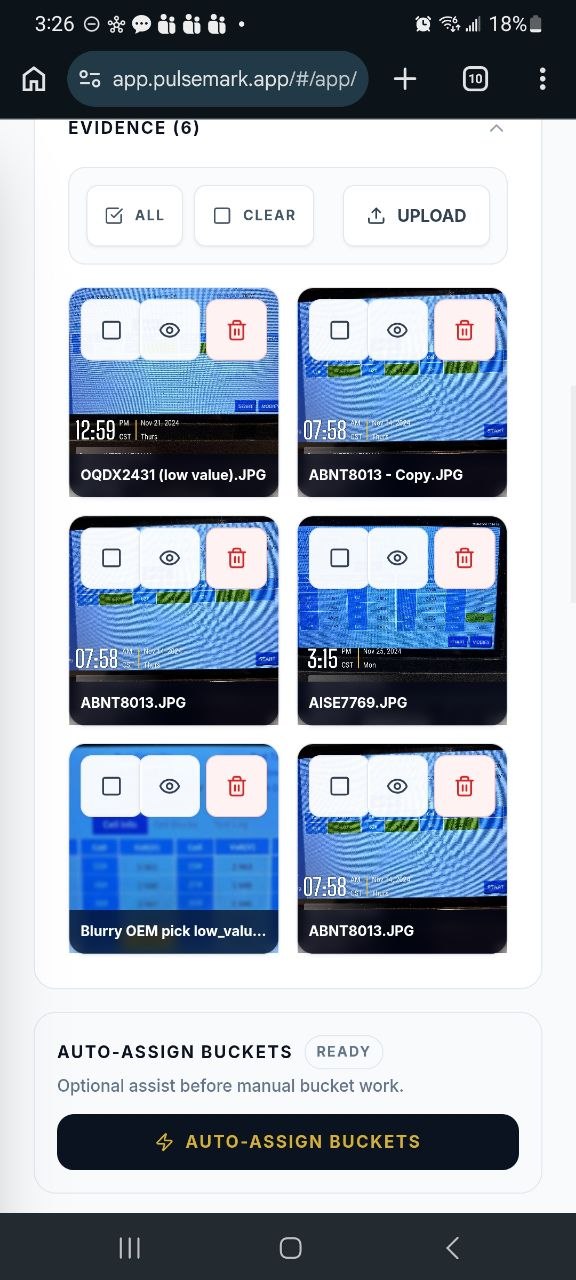
Gather supported evidence uploads such as images, PDF, TXT, XML, CSV, and XLSX so the record starts from the material field teams already have.
Keep the diagnostic case organized around the working evidence set, the current review posture, and the people responsible for the next decision.
Generate field outcomes from the evidence record so OEM teams can move the case forward with documented reasoning and controlled access.
Extend scoped access to an outside provider company when needed, while keeping revocation, audit continuity, and OEM oversight tied to the case.
Mobile-friendly diagnostic views help teams review evidence, triage blockers, challenge findings, and prepare outcomes without losing operational control.
Evidence intake
Structured intake for field evidence before review begins.
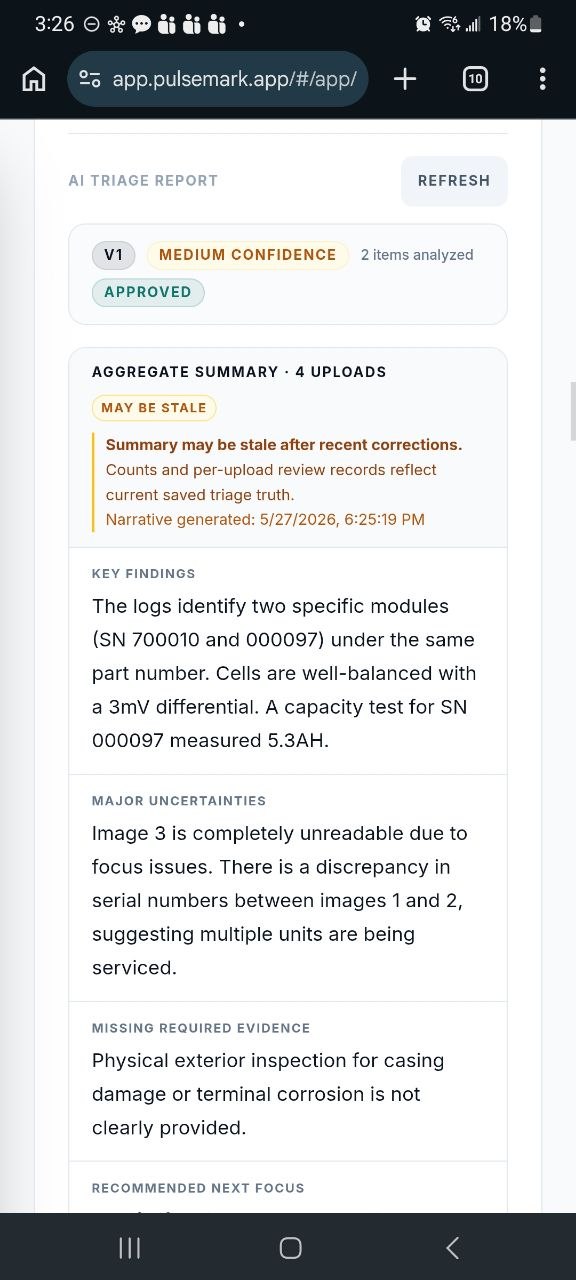
Triage review
Review triage data and diagnostic records organized by the case.
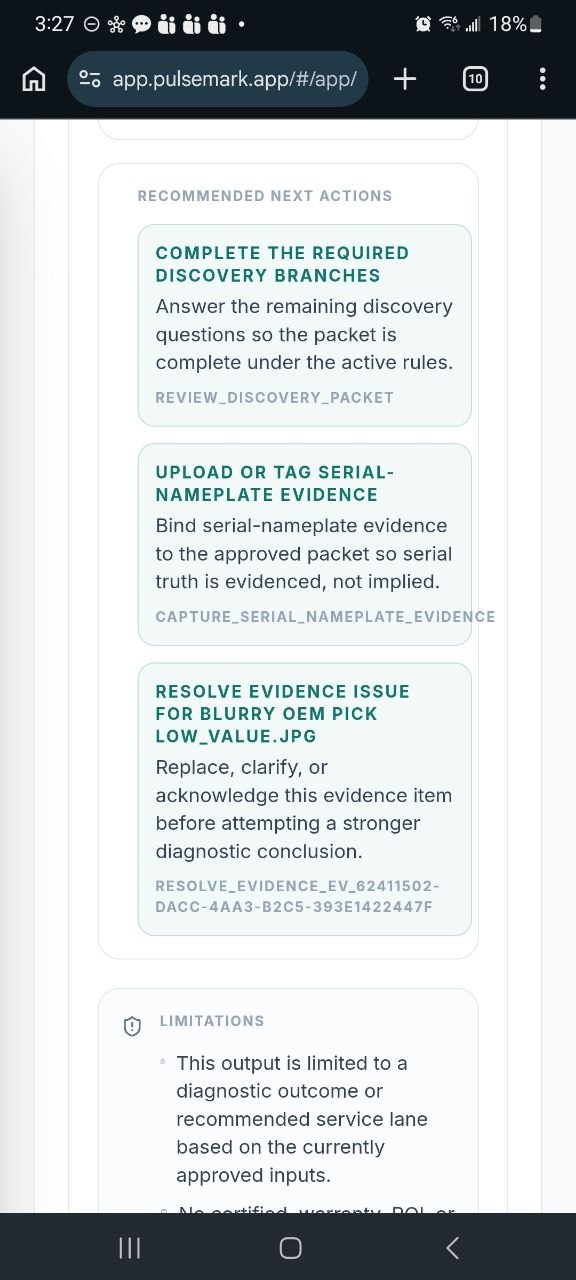
Challenge workflow
Challenge or review state where OEM teams document blockers and exceptions.

Decision outcome
Controlled outcome generation from documented evidence and review history.
1 Evidence Credit equals 1 standard uploaded evidence item, about 12.5 MB. Larger supported files consume additional credits in 12.5 MB blocks. Evidence Credits reset monthly and do not roll over. Active case evidence retention is included in Evidence Credit pricing.
Active case evidence remains with the active case record under the current retention policy. Archived cases follow the archive and purge lifecycle, including a 30-day archive window and a 6-month extension measured from the extension timestamp. Deleted or trashed evidence does not receive active-case retention.
Provider Bridge connects an outside provider company to scoped, revocable case access while the OEM remains the paying customer. Provider Bridge is paid by the OEM, and provider work may consume OEM Evidence Credits where applicable. Outside providers participate as connected organizations rather than normal OEM users.
Review the current public pricing path for Evidence Credits, OEM plans, and Provider Bridge positioning without exposing unrestricted purchase flow.
Trial and pilot discussion stays sales-qualified so OEM teams can align deployment scope, operating constraints, and evidence volume before access is expanded.
Use the contact path for OEM rollout questions, deployment timing, provider collaboration planning, and commercial follow-up.